CAN AI AUDITS SECURE YOUR INFRASTRUCTURE? THE LORIKEET SECURITY CASE STUDY
>>The AI Security Gap is the New Front Line
The illusion that AI-driven code reviews can replace human penetration testing is a dangerous corporate myth. While tools like Claude and Cursor are phenomenal at scrubbing source-level vulnerabilities, they are structurally blind to the "connective tissue" of modern infrastructure. The bottom line for leaders is simple: as AI lowers the barrier for code-level security, the high-value risk shifts to runtime and configuration—a domain where human intuition remains the only viable defense.
>>The Business Case: Why "Good Enough" AI is a Liability
In my years tracking the shift toward autonomous systems, I’ve seen a recurring pattern: leaders mistake efficiency for efficacy. The Lorikeet Security case study involving Flowtriq is the ultimate wake-up call for anyone sitting in a C-suite or VP of Engineering chair. Flowtriq did everything "right" by modern standards—they ran a comprehensive, Claude-driven security audit that successfully nuked the standard gallery of horrors: SQL injections, XSS, and weak crypto.
However, the subsequent manual pentest by Lorikeet surfaced five critical findings that the AI missed entirely. This isn't just a technical nuance; it’s a massive business risk. If you are building in fintech, healthcare, or SaaS, your competitive advantage isn't just your features—it’s your trust. Relying solely on AI audits creates a "Swiss cheese" security posture where the holes are invisible to the software itself. By integrating practitioner-led testing with AI-native workflows, firms can achieve a level of resilience that justifies premium pricing and accelerates enterprise sales cycles. In a world where the future is autonomous, your human-led validation is what actually secures the perimeter.
>>Key Strategic Benefits
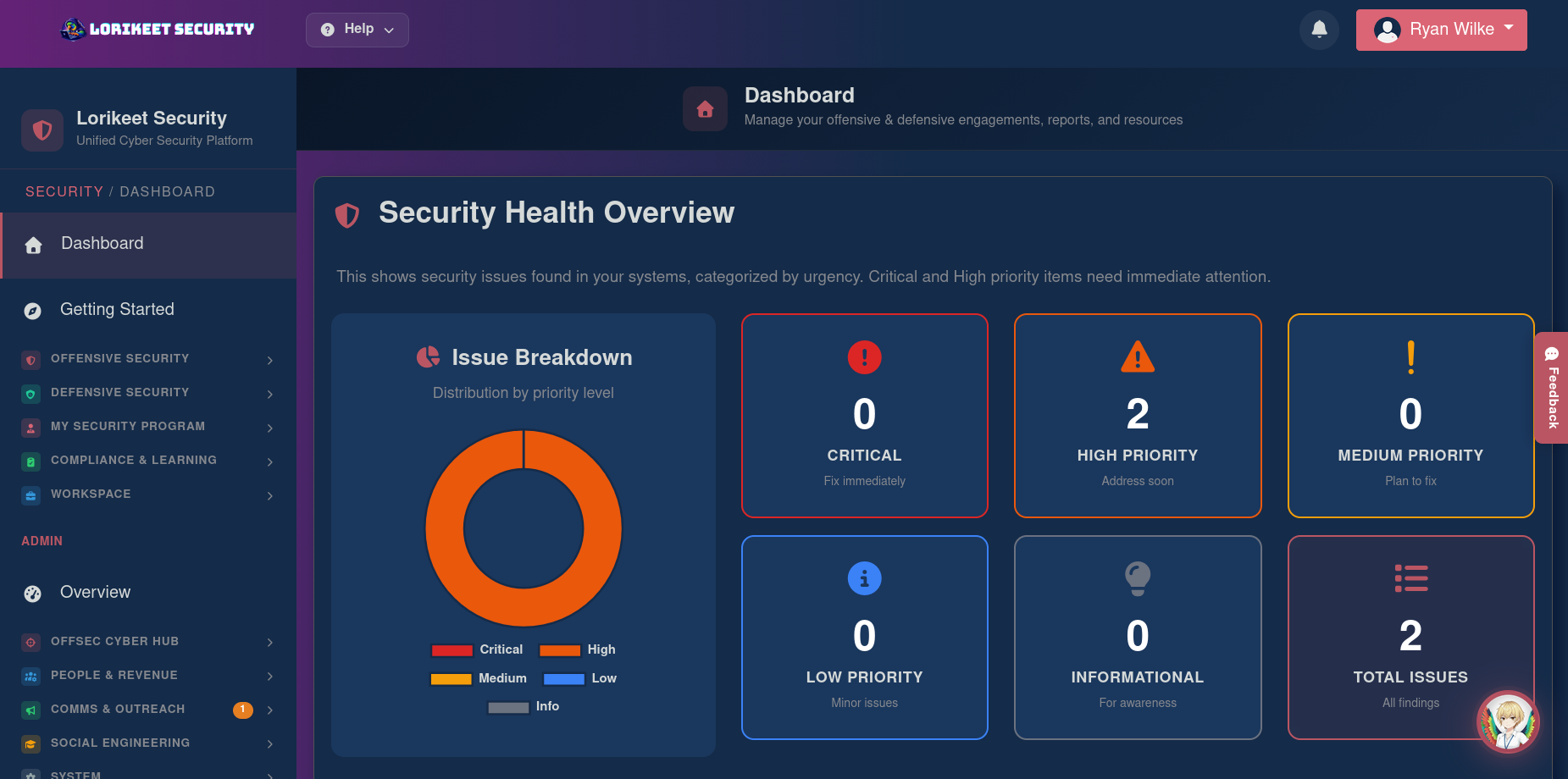
- Operational Efficiency: Integrating a PTaaS (Penetration Testing as a Service) portal like Lorikeet’s allows for real-time chat and live findings. This eliminates the "dead week" where developers wait for a static PDF report, allowing your team to remediate High and Medium risks while the engagement is still active.
- Cost Impact: While manual pentesting is an upfront investment, the cost of a breach due to a misconfigured reverse-proxy or a session management edge case—things AI consistently misses—can be existential. Fixing a vulnerability in the "residual risk" category post-deployment costs 10x more than catching it during a structured Lorikeet engagement.
- Scalability: As you scale toward SOC 2, HIPAA, or FedRAMP compliance, you need a partner that understands the AI-native stack. Lorikeet’s ability to bridge the gap between automated code scrubbing and manual infrastructure testing means your security posture grows alongside your codebase without needing a massive internal headcount.
- Risk Factors: The primary risk is complacency. Leaders might see a "clean" AI audit and de-prioritize manual testing to save budget. This creates a "shadow vulnerability" surface in the runtime and cloud configuration that attackers—who are also using AI—will eventually find and exploit.
>>Navigating the Implementation Curve
Adopting a hybrid security model—where AI handles the "easy" code-level bugs and firms like Lorikeet handle the complex runtime architecture—requires a shift in the traditional development lifecycle. You aren't just buying a one-off test; you are integrating an offensive security layer into your CI/CD pipeline.
From my perspective, the implementation timeline is surprisingly lean if you use a modern PTaaS portal. Instead of the archaic "kickoff call to final report" slog that takes six weeks, modern firms need to look for real-time integration. You'll need to allocate your lead engineers for the initial "context transfer" to the pentesting team, ensuring they understand your specific cloud architecture and session handling. The goal is to move away from the "check-the-box" compliance mentality and toward a continuous attack surface management strategy. It’s about making sure your team is ready to act on live findings rather than archiving a report in a "Security" folder that no one ever opens.
>>The Offensive Security Landscape
The market is currently split between legacy players and the new guard. Traditional firms like Bishop Fox or NCC Group offer deep expertise but often struggle with the speed and "AI-first" mentality of modern startups. On the other end, you have automated scanners like Snyk or Checkmarx, which are excellent for the "low-hanging fruit" but lack the creative intuition to find session management edge cases.
Lorikeet Security occupies a unique middle ground. They aren't trying to fight the AI; they are leveraging the fact that AI-assisted coding (via Cursor or GitHub Copilot) has fundamentally changed what needs to be tested. While Bugcrowd or HackerOne provide crowdsourced scale, they often lack the structured, compliance-aligned reporting (SOC 2, PCI-DSS) that an executive needs for a board meeting. Lorikeet’s focus on the "gap" left by AI is a strategic differentiator that most legacy vendors haven't caught up to yet.
>>Recommendation: The Executive Playbook
Stop treating pentesting as a compliance hurdle and start treating it as the final validation of your AI-driven development. I recommend a three-step action plan: First, mandate an AI-driven audit for all new features to catch the "dumb" mistakes. Second, engage a firm like Lorikeet Security to perform a deep-dive on the runtime and infrastructure—the areas where AI is blind. Finally, move your reporting into a live portal to ensure your team is remediating in real-time. Don't let your AI's confidence become your company's greatest vulnerability.